
Pex
TikTok Sound ID Report
Turning Fragmented Usage Data into Actionable Claims
Designed a reporting workflow that transformed messy TikTok Sound ID data into a defensible signal clients could act on, helping uncover payout gaps and increase artist compensation.
Highlights
Outcomes
~20 Sound IDs per Song
Analyzed 141K songs and found that each song mapped to roughly 20 Sound IDs on average, revealing widespread attribution fragmentation.
830M+ Videos Uncovered
Connected 141K matched songs to more than 830 million videos, revealing how TikTok's existing payment model was underpaying artists.
$50M+ in New Royalties
Helped unlock more than $50 million in additional artist royalties after licensing terms were renegotiated using this report data.
Impact
Market-Level Visibility
Made the scale of Sound ID fragmentation visible, reinforcing the need for updated artist payment rules.
Claim Verification at Scale
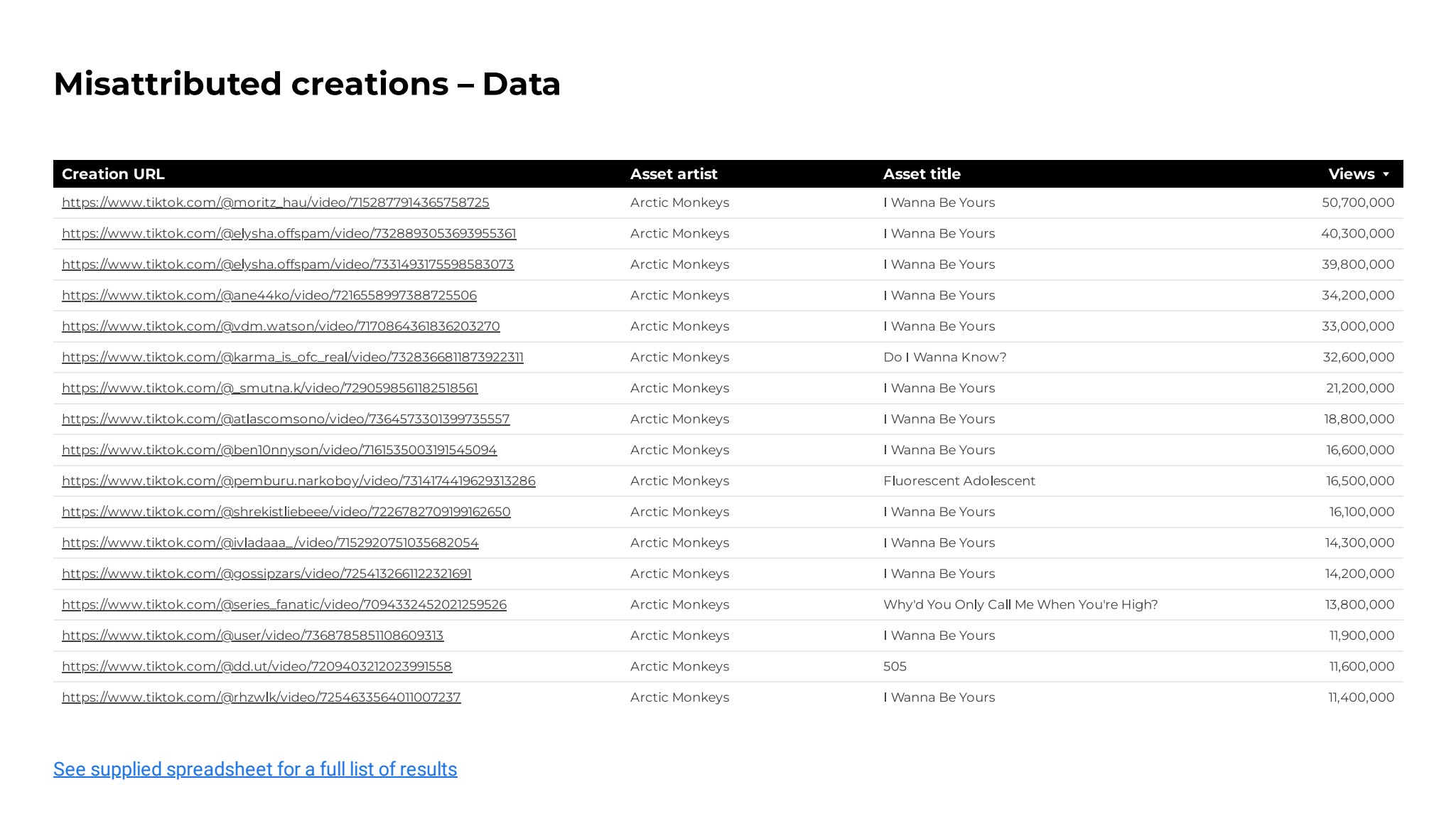
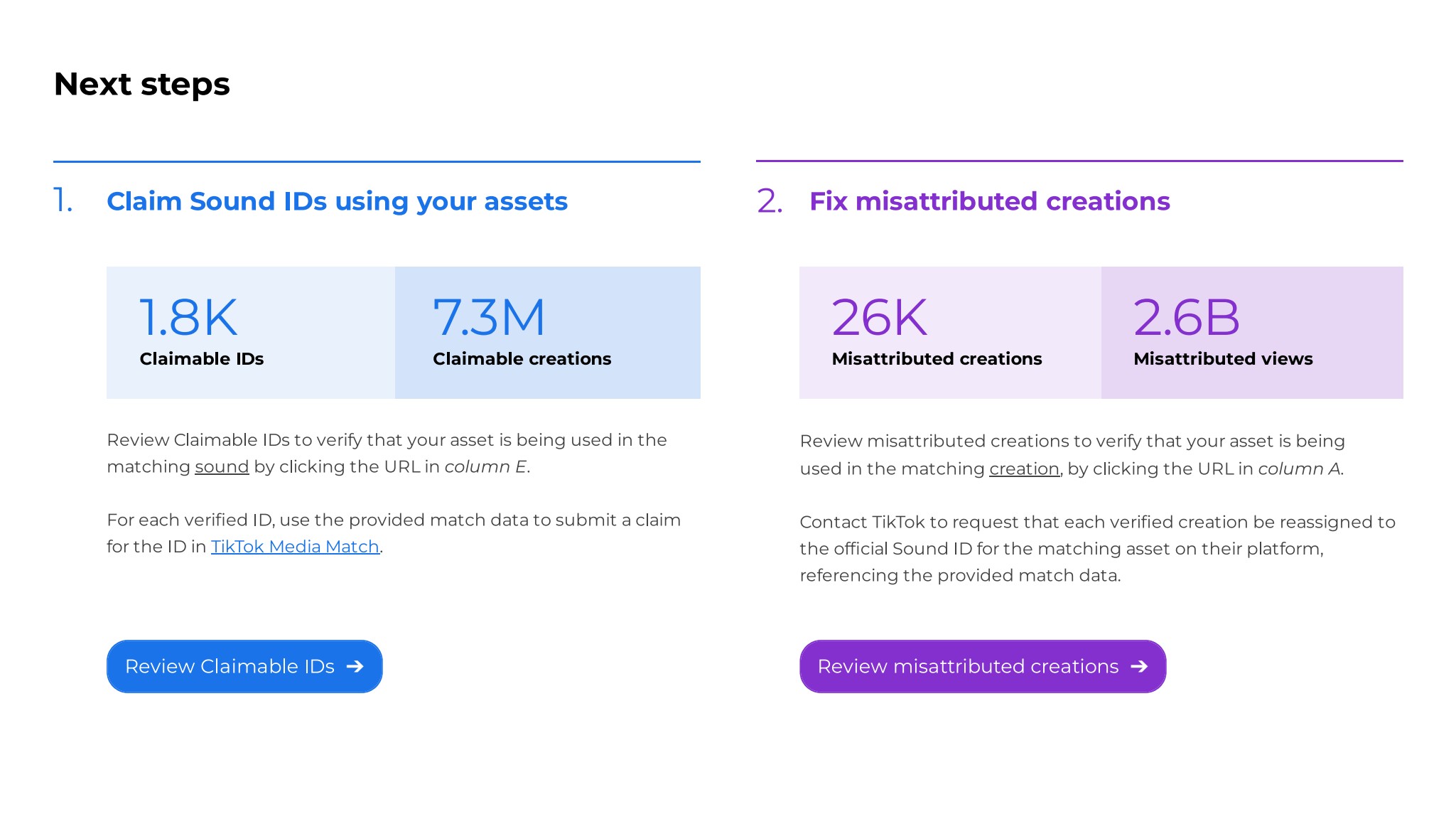
Gave rights teams a trusted way to verify usage and identify misattributed Sound IDs across massive datasets.
Compensation Transparency
Created defensible evidence that strengthened payout and licensing conversations with TikTok.
Press
Background
Context
TikTok had become a primary channel for music discovery, but attribution and payouts were difficult for rights holders to validate. Pex had matching infrastructure capable of identifying usage at scale, but clients needed a productized reporting layer they could trust and act on.
Role
As Principal Product Designer, I led end-to-end design of the reporting workflow, including customer research, wireframing data views, prototyping workflows, designing interactions and interfaces, and usability testing with rights teams.
Stakeholders
- Artists, labels, publishers, and rights-management teams
- Pex product, data, and engineering partners
- Client legal/compliance and licensing teams
Challenges
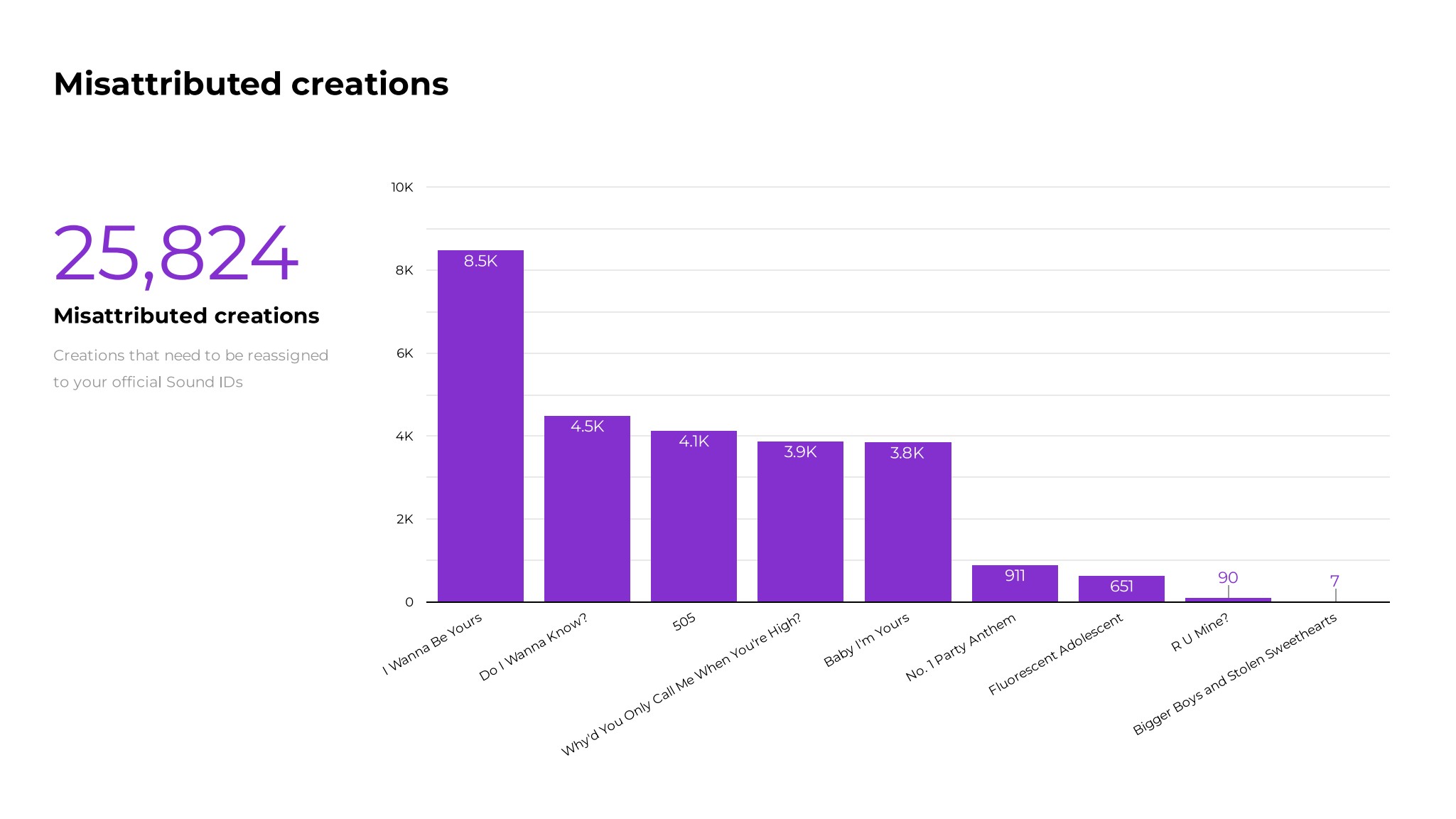
- Music usage on TikTok appeared under-attributed across many catalog tracks.
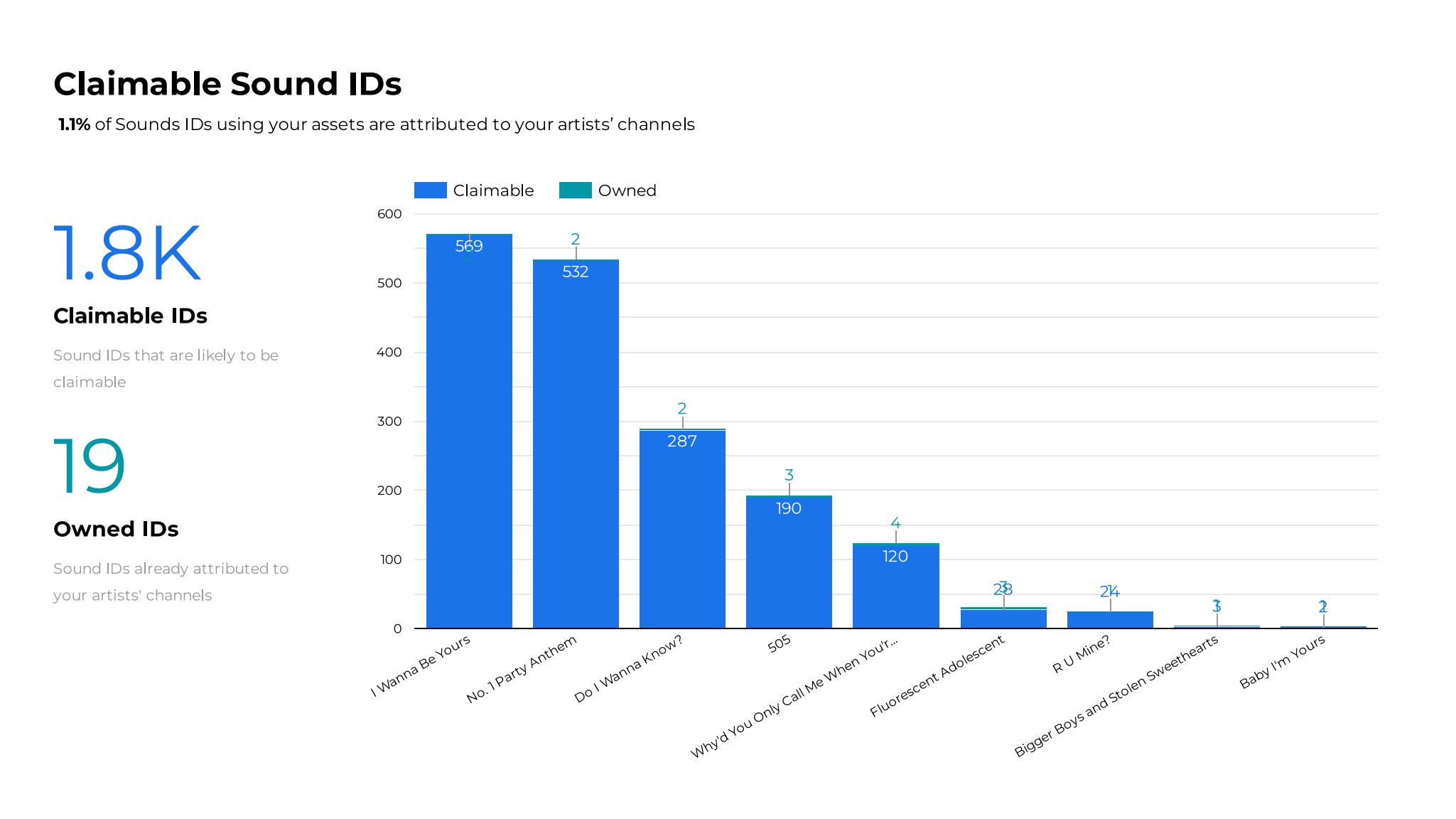
- Sound IDs were fragmented across variants and re-uploads, reducing reporting clarity.
- Claims needed to happen quickly because missed windows could mean missed payment.
- Clients needed evidence strong enough to support licensing and payout conversations.
Objectives
Quantify the Gap
Measure the real scale of Sound ID fragmentation and reported usage discrepancies.
Drive Client Action
Deliver a report format clients could use immediately for validation and claims.
Market Transparency
Turn music detection reporting into an industry narrative around compensation on TikTok.
Research and Discovery
What We Found
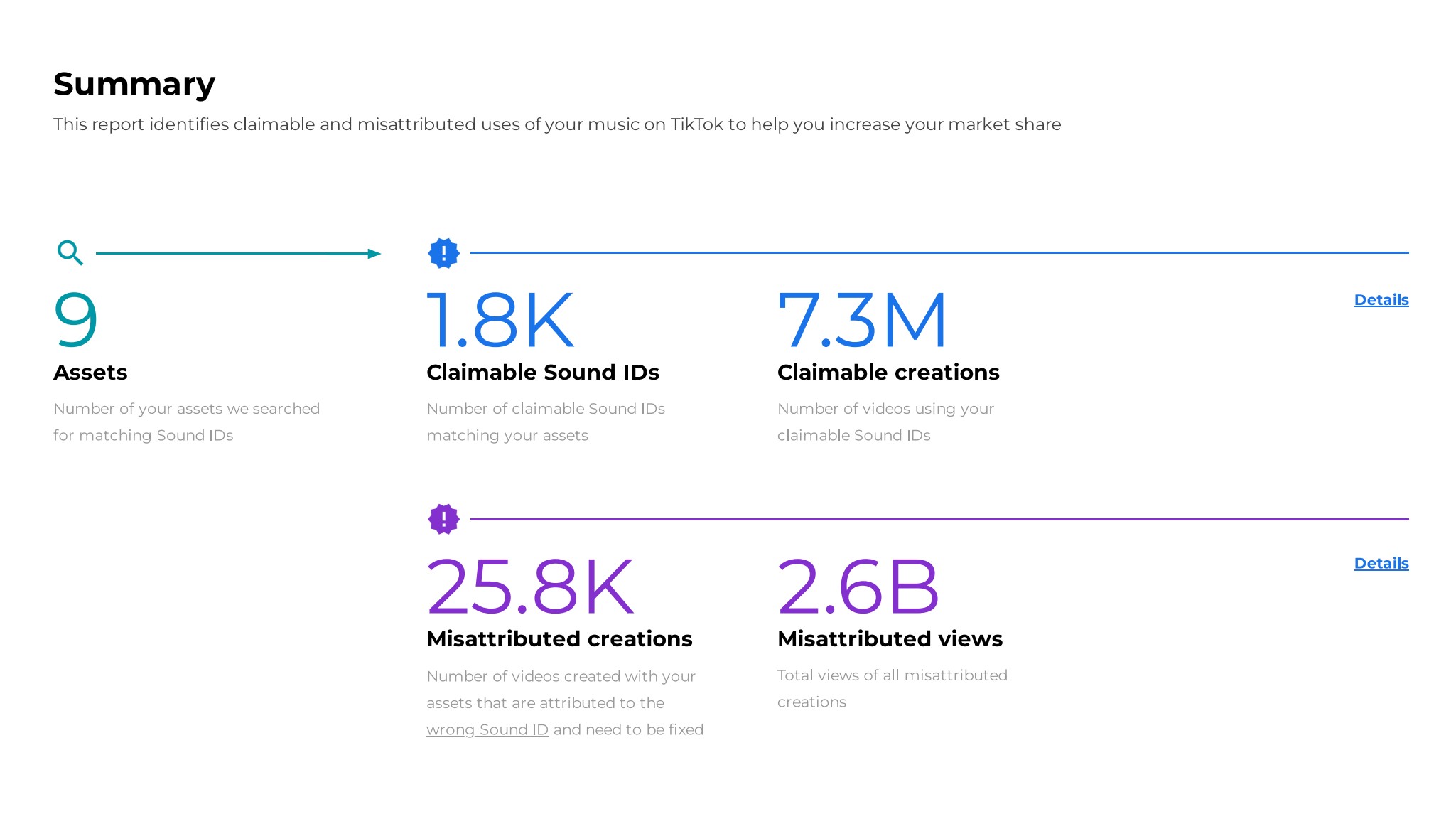
- 141,000 songs mapped to 2.8 million unique Sound IDs.
- Those Sound IDs tied to 830 million-plus videos.
- An average of roughly 20 Sound IDs per song made payout visibility difficult.
Implication
The core problem was not detection quality. It was translation: clients lacked a product layer that converted noisy, unstructured matching data into decision-ready evidence.
Methods
- Large-scale catalog analysis across major and independent rights-holder data
- Sound ID matching and clustering to detect duplicate/fragmented attribution paths
- Workflow interviews with internal and client-side rights teams
Design Approach
Signal Prioritization
Structured report views around the highest-value claim and payout risks first.
Narrative Framing
Paired quantitative findings with clear language for legal, licensing, and business teams.
Actionable Outputs
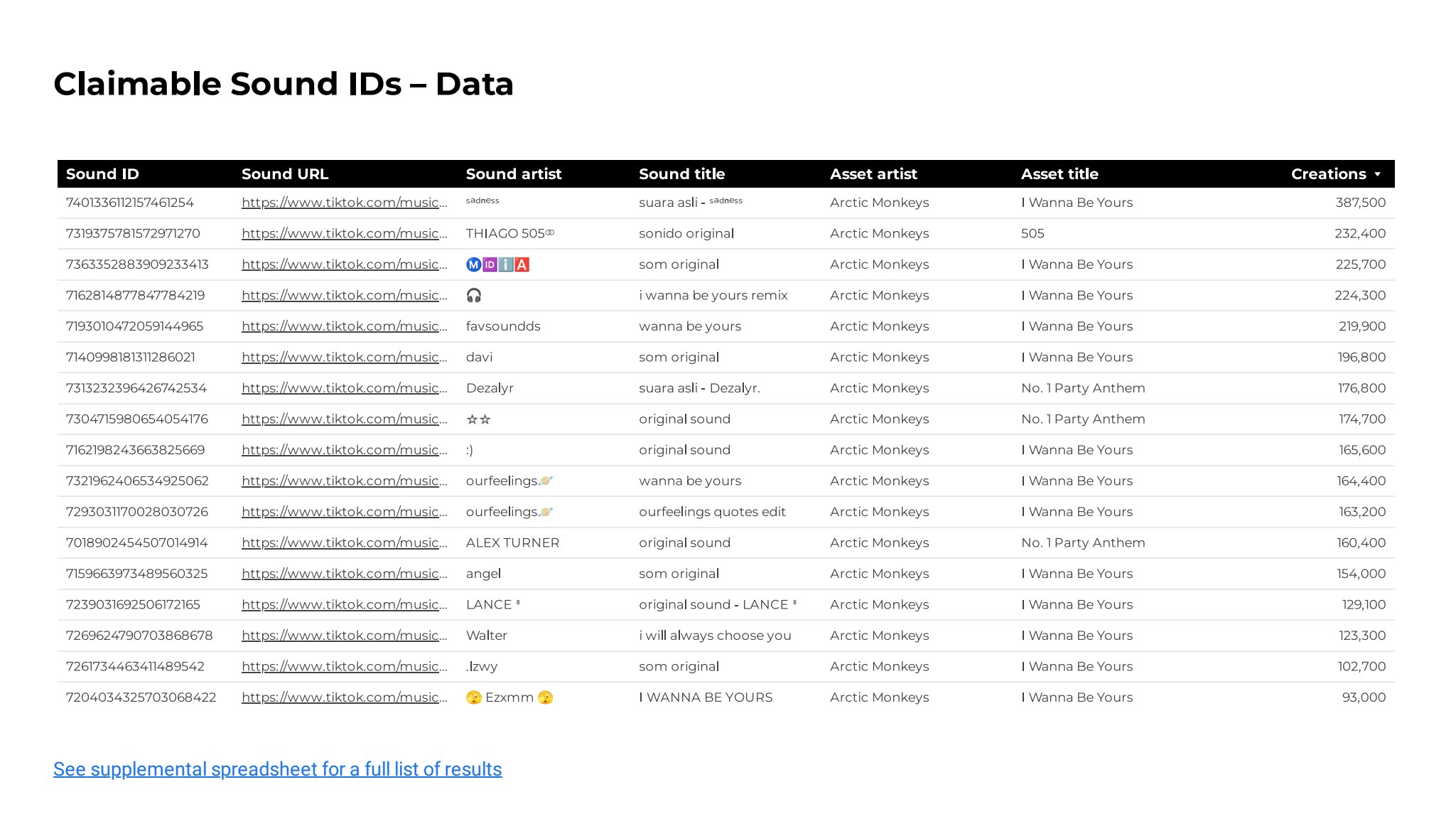
Designed report hierarchy to support verification, escalation, and faster decision-making.
Cross-team Validation
Iterated with internal experts and client workflows to ensure real-world usability.
Solution
I led creation of the TikTok Sound ID Report as a productized transparency layer: a clear, repeatable reporting experience that surfaced hidden usage patterns, helped clients verify attribution, and equipped them to pursue fairer compensation.
Reflections
This work demonstrated how design can translate complex data into business leverage. By making the attribution gap visible and actionable, the report helped support broader market pressure for payout reform, reflected in TikTok's announced 2026 payment-rule changes.