
Pex
Pex Search
Turning Detection Infrastructure into an Enterprise Compliance Platform
Repositioned Pex’s matching technology as a compliance product that expanded market reach and drove durable revenue growth through enterprise adoption.
Highlights
Outcomes
40-50% YoY Net Revenue Growth
Achieved sustained year-over-year net revenue growth after launching in 2023.
Fortune 5 Client in < 6 Months
Moved from first prototype to onboarding a Fortune 5 client in less than six months.
90+ Days to 30 Days
Reduced sales cycle length by replacing static demos with an interactive product experience.
Impact
Expanded Addressable Market
Extended Pex beyond legacy copyright-holder workflows into broader platform, brand, and compliance use cases.
Acquisition Driver
Revenue growth from Pex Search became a key factor in Vobile's acquisition of Pex in 2025.
Validated a Follow-On Product
Demand from Search customers directly informed and de-risked the creation of Brand Monitoring.
Press
Background
Context
Pex supports rights management and content identification across digital platforms. The team saw an opportunity to expose advanced matching capabilities in a product that non-technical teams could use directly. We also published research highlighting how prevalent modified audio had become, which helped create urgency and inbound interest from label and rights teams.
Role
As Principal Product Designer, I led end-to-end design, including customer research, wireframing solutions, prototyping workflows, designing interactions and interfaces, and usability testing for enterprise compliance use cases.
Stakeholders
- Product and engineering leadership
- Brands and rights-holder operations teams
- Music publishers, labels, and distributors
- Platform partners and legal/compliance teams
Challenges
- Legacy workflows had a narrower TAM and limited growth potential.
- Existing market tools lacked quality and transparency for rights decisions.
- Platforms and brands needed clarity on potential infringement risk.
- Complex matching outputs had to be understandable to non-technical users.
Objectives
Increase Transparency
Make music usage visible and attributable across platform content, including track and rights metadata.
Improve Actionability
Help teams move from detection to licensing/compliance decisions faster.
Expand Detection Coverage
Identify whether files contain music, determine if songs are fully AI-generated, and support broader rights workflows.
Research and Discovery
Key Findings
- Copyright misuse patterns were widespread.
- Users needed clearer evidence and stronger confidence signals.
- Brands and rights-holders needed simpler workflows.
- Teams needed one flow that confirmed music presence, identified songs, and flagged fully AI-generated tracks.
- Research on modified audio prevalence became a demand engine that validated product-market pull.
Personas
- Platforms and distributors
- Brands
- Copyright holders
- Civil rights organizations
Methods
- Interviews and surveys
- Competitive analysis
- Quantitative analysis
Design Approach
Strategy
Prioritized high-value use cases and reduced friction for non-technical users.
Journey Mapping
Mapped end-to-end flow from query to licensing decision support.
Prototyping
Iterated from low to high fidelity prototypes with stakeholder feedback.
Usability Testing
Validated across existing customers and new leads with distinct use cases.
Solution
File Intelligence
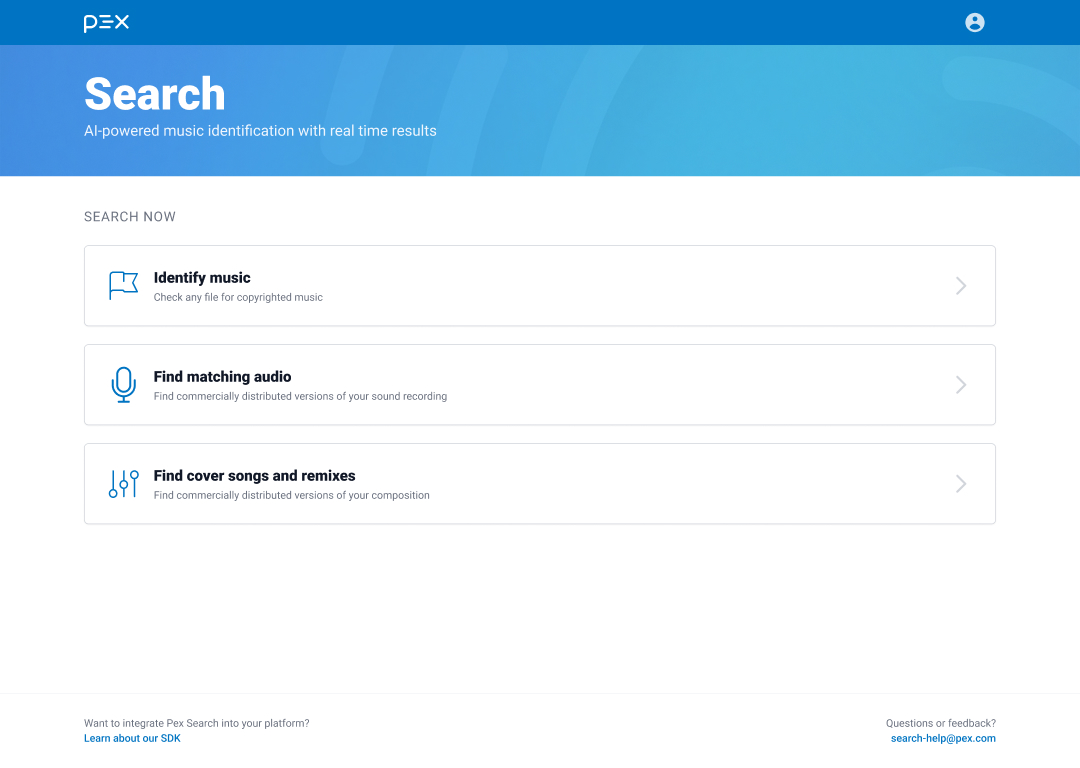
Users can check full files for music in seconds, then run identification and compliance workflows from the same flow.
Search Results
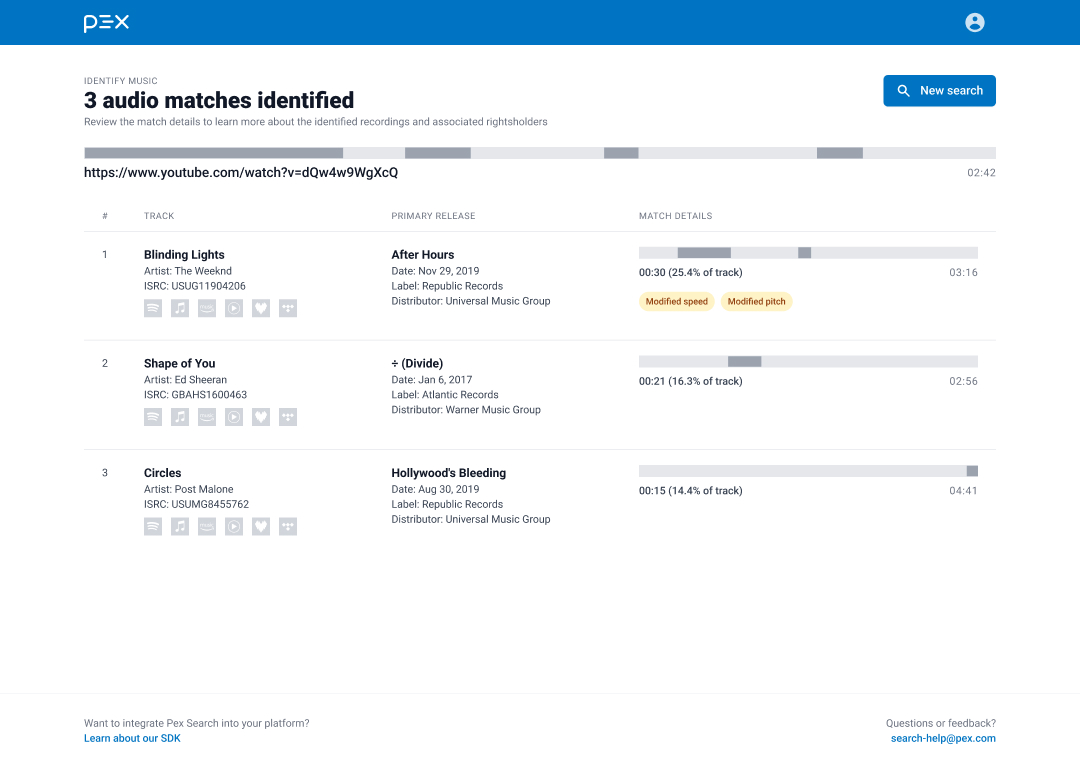
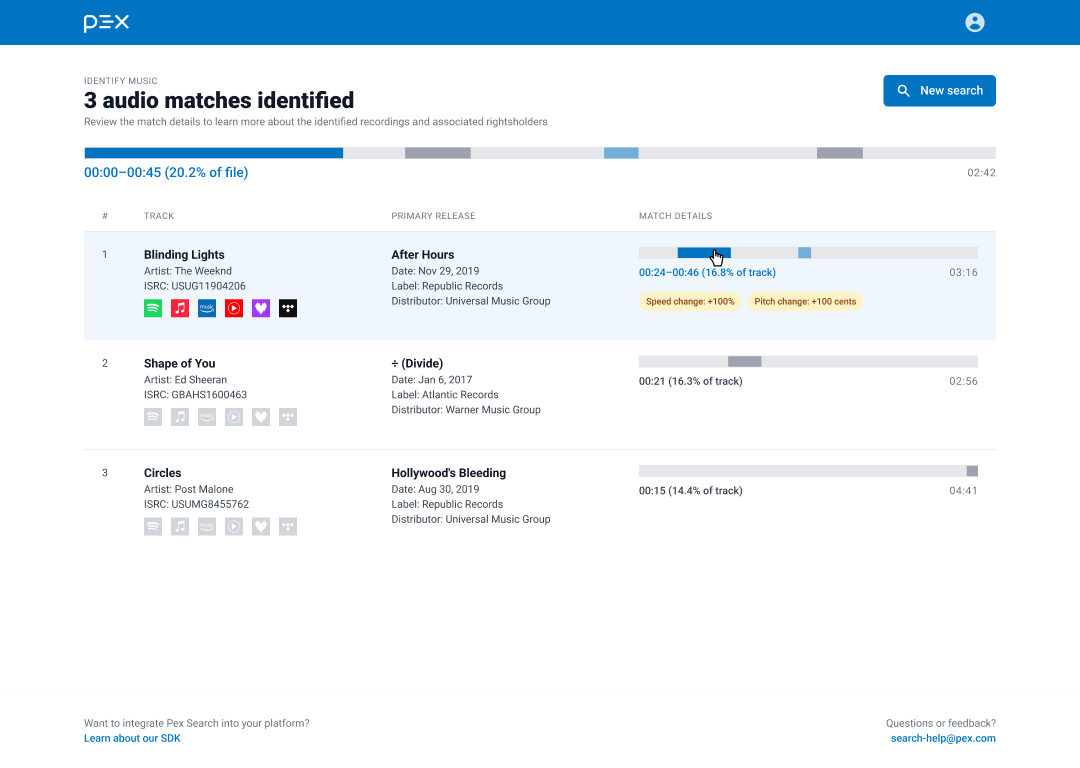
Returned matches include title, artist, and rightsholder metadata for fast triage and licensing decisions.
AI Signal Layer
AI Song Detector capabilities added real-time classification for fully AI-generated songs via API, extending coverage for platforms and rights teams.
Reflections
The project reinforced that strong data products succeed when signal quality and workflow clarity advance together. Future iteration opportunities include deeper decision support and expanded automation.